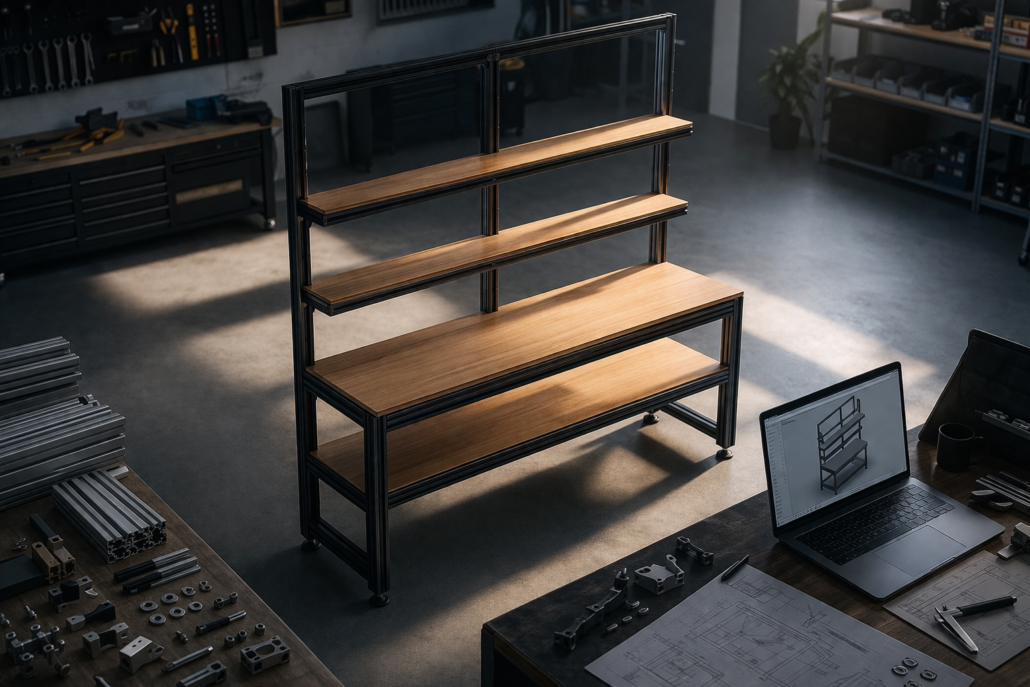


Understanding the Requirement
Every project starts with getting a clear understanding of what the customer actually needs. A workbench might seem simple on the surface, but the design can vary significantly depending on how it will be used.
We begin by asking a series of practical questions to define the application. This includes the intended use of the bench, the type of work being carried out, and whether the structure will be stationary or mobile. For example, an electronics workbench requires a different level of stability and surface finish compared to a general-purpose packing bench.
Load requirements are also critical. We need to understand whether loads will be evenly distributed or concentrated in specific areas, as well as the expected maximum weight. Span lengths and support conditions play a big role here, as they directly influence profile selection and overall rigidity.
Environmental factors are also considered. Exposure to moisture, chemicals, or outdoor conditions can affect material choices and finishing requirements.
Finally, we look at future needs. Many customers want the ability to expand their setup over time by adding shelves, drawers, or accessories. Designing for this upfront ensures the system remains flexible and avoids costly modifications later.
The more information we can gather at this stage, the more accurately we can design a solution that performs as expected and adapts to the customer’s needs over time.
To help us recommend the right profile sizes, surfaces, fittings, and overall design approach, please complete this checklist with as much detail as possible.
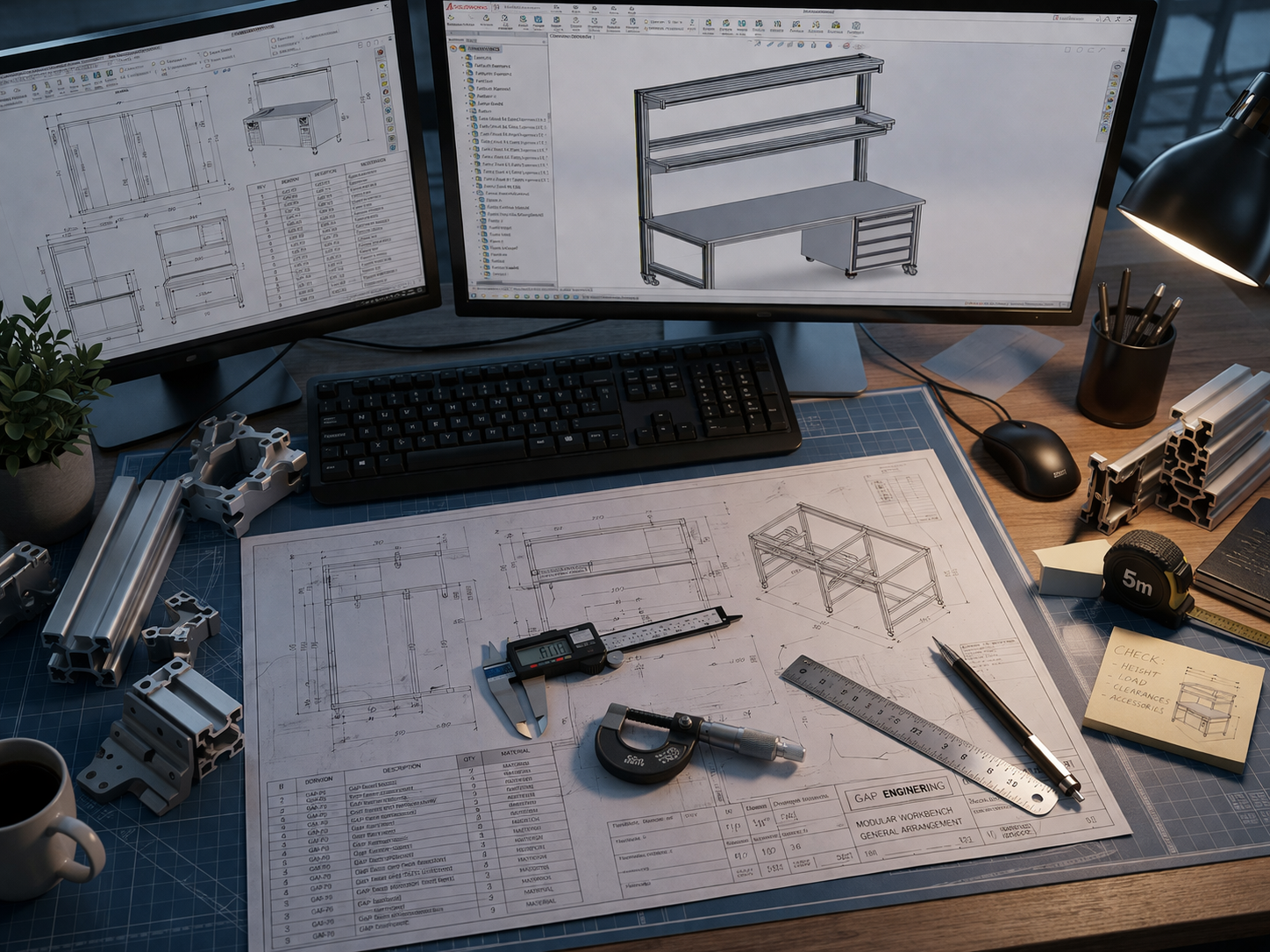
Design and CAD Development
Once we have gathered enough information from the customer, the next step is to translate those requirements into a structured design.
We use SOLIDWORKS to build a 3D model of the system, typically using Weldments to create the frame. This allows us to quickly define the overall layout, proportions, and structural configuration of the workbench.
At this stage, key decisions are made around profile selection, support spacing, and overall rigidity. The design is developed not only to meet the immediate requirements, but also to allow for future expansion where required.
From the 3D model, we generate detailed drawings that clearly show the dimensions, layout, and material selections. These drawings are then sent to the customer for review and approval.
This step is critical, as it ensures that both the design intent and practical requirements are aligned before any material is cut or processed.

Quoting and Commercial Approval
Once the customer has reviewed and approved the design, the project moves into the commercial stage.
At this point, we use the CAD model to extract all the information required for accurate costing. This includes the full cut list, profile quantities, machining requirements, and all associated components such as connectors, fasteners, and accessories.
Using this data, we prepare a detailed quotation that reflects the true scope of the project. Because the design has already been resolved, this allows for a high level of accuracy in both material and processing costs.
We also confirm delivery requirements at this stage, including location, timing, and any specific packaging or handling considerations. For larger or more complex systems, this can influence both logistics and overall project cost.
Once the quotation is issued and accepted, the project is formally approved and ready to move into production
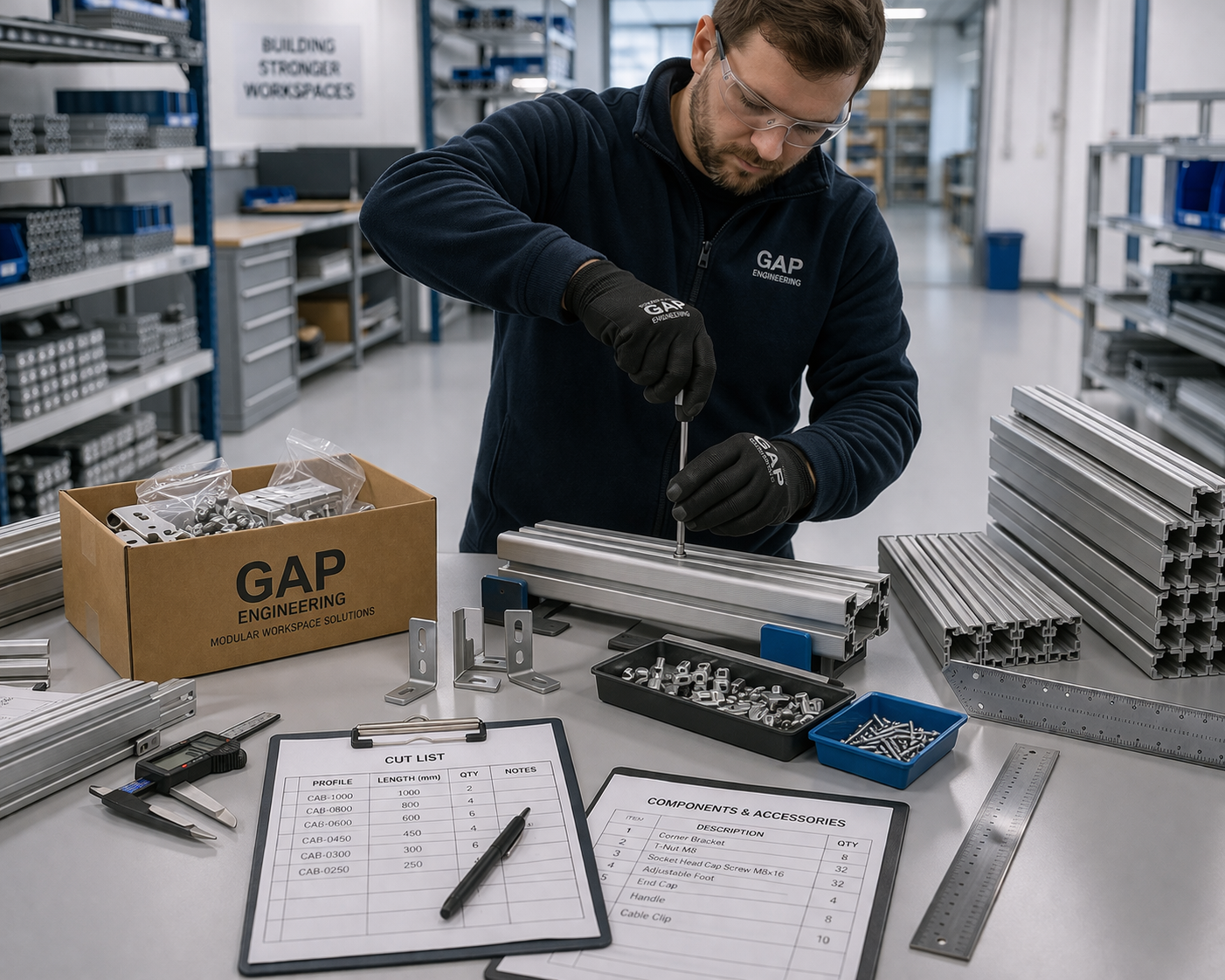
Production and Dispatch
Once the quotation has been approved, the project moves into production.
Using the cut list generated from the CAD model, the aluminium profiles are processed and cut to the required lengths. Each component is then machined as needed, including drilling, tapping, and any additional operations required for assembly.
At the same time, all necessary accessories and fittings are picked from stock. This includes connectors, fasteners, brackets, and any other components specified in the design.
The system is then prepared for dispatch. In most cases, this involves carefully packing the components as a flat pack to allow for efficient transport and straightforward assembly on site. Packaging is arranged to ensure all parts arrive in good condition and are clearly organised.
If required, we can also provide pre-assembly or complete assembly services, depending on the complexity of the system and the customer’s preferences.
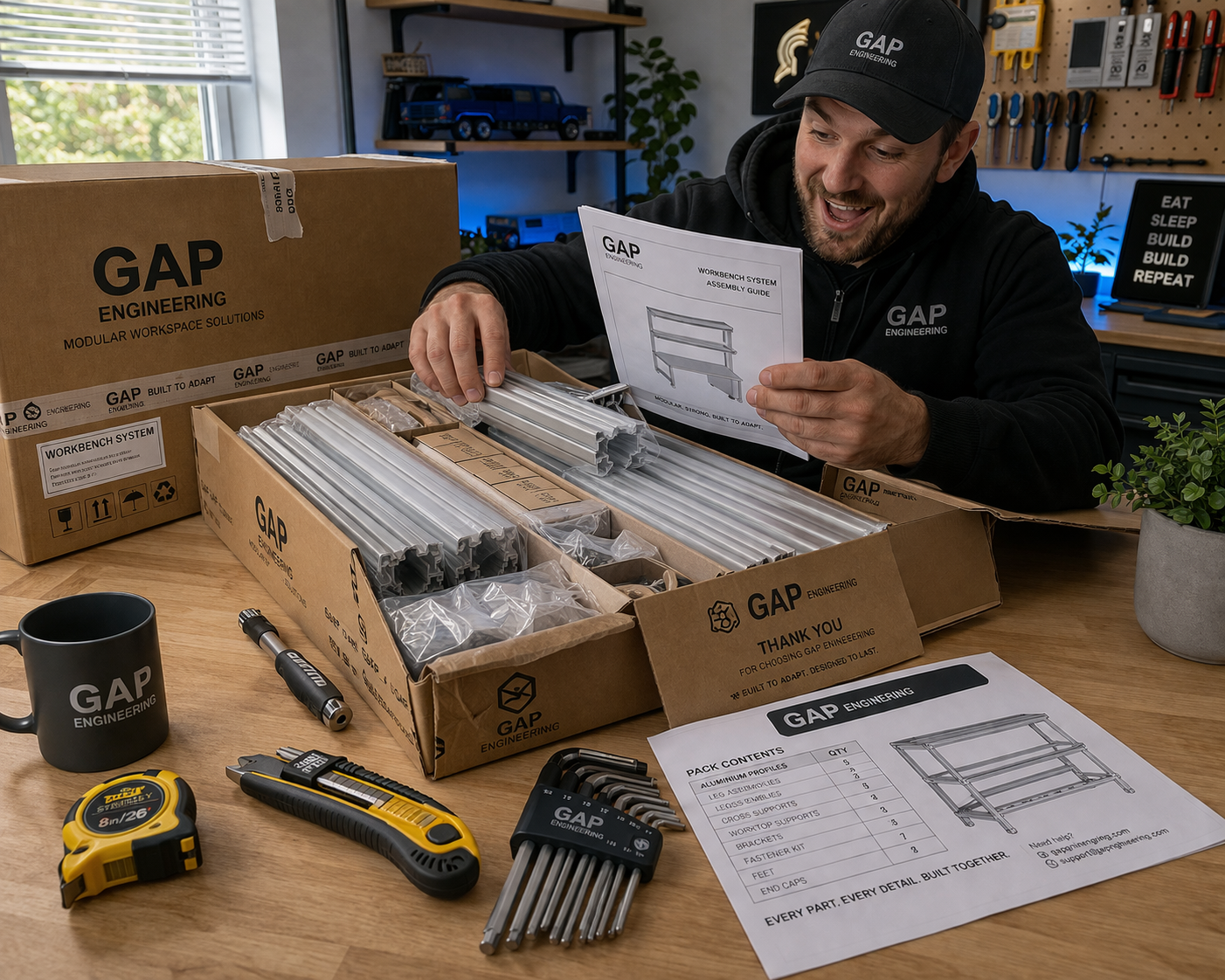
Delivery and Assembly
The completed system can now be dispatched been dispatched, it is delivered to the customer as a carefully organised flat-pack.
Each component is packed in a logical manner to make identification and assembly straightforward. Profiles, fasteners, and accessories are grouped to match the design, reducing the risk of confusion during installation.
The modular nature of the T-slot system allows for simple and intuitive assembly using basic tools. This enables customers to construct the workbench on-site without the need for specialised equipment.
For larger or more complex systems, we can provide assembly guidance or full installation support if required.
Once assembled, the result is a strong, precise, and adaptable workspace that reflects the original design intent and is ready for immediate use.